
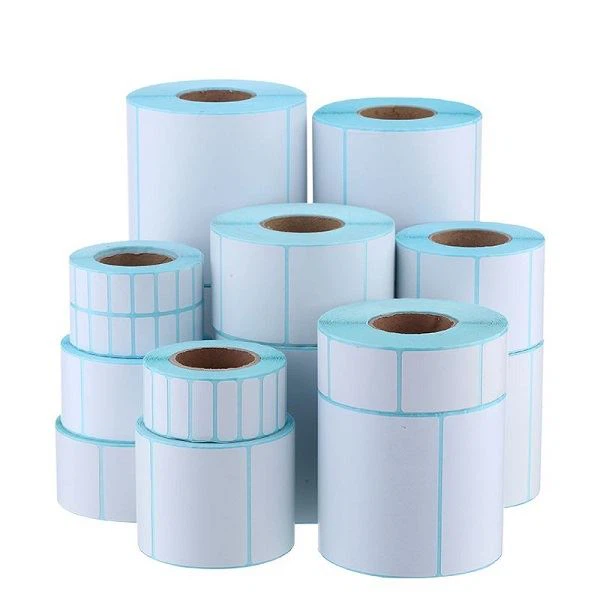
A label that fades on a parcel before it reaches the customer costs more than the label itself. So does a barcode that won’t scan at the till, or a food label that rubs off in the chiller. Most of these problems come from one early decision: direct thermal or thermal transfer.
This guide explains the difference, the sizes and ribbons that matter, and the questions to ask any thermal labels supplier before you order in bulk.
Direct thermal vs thermal transfer
Both types print with heat. The difference is where the image comes from.
Direct thermal labels have a heat-sensitive coating. The printer head heats the label and the coating turns black. There is no ribbon, so running costs are low and printers are simple.
Thermal transfer labels have no coating. The printer melts ink from a ribbon onto the label. The print lasts much longer and resists heat, light, moisture and rubbing.
| Direct thermal | Thermal transfer | |
| Ribbon needed | No | Yes |
| Print life | Short (weeks to months) | Long (months to years) |
| Heat and sunlight | Darkens or fades | Holds up well |
| Running cost | Lower | Higher (labels plus ribbon) |
| Typical uses | Shipping labels, receipts, short-life food labels, queue tickets | Asset tags, warehouse racking, product barcodes, pharma and chemical labels |
The UAE climate tips the balance in some cases. A direct thermal label on a box that sits in a hot container or a delivery van can darken until the barcode is unreadable. If your labels face heat, sunlight or a long shelf life, thermal transfer is usually the safer choice.
Shop the two options here: direct thermal labels and thermal transfer labels.
Choosing the right ribbon
If you go with thermal transfer, the ribbon matters as much as the label.
- Wax ribbons are the most economical. They suit paper labels for shipping, retail and general barcodes.
- Wax-resin ribbons give sharper print with better smudge and scratch resistance. They suit coated paper and many synthetic labels.
- Resin ribbons are the toughest. They suit synthetic labels exposed to chemicals, solvents, heat or outdoor use.
Two details cause most ribbon problems. The ribbon must be at least as wide as the label, and its winding (ink-in or ink-out) must match your printer. Send your printer model to your supplier and they can confirm both. Browse our wax, wax-resin and resin ribbons.
Label size, core and printer fit
Getting these details right avoids a box of labels that won’t load.
- Label size. Common sizes include 100 × 150 mm for courier and e-commerce shipping, 100 × 50 mm for cartons, and small sizes such as 50 × 25 mm or 38 × 25 mm for retail barcodes and price labels.
- Core size. Desktop printers usually take a 25 mm core. Industrial printers usually take 76 mm.
- Roll diameter. Check the maximum outer diameter your printer holds.
- Gap, black mark or continuous. The label layout has to match the sensor setting on your printer.
- Printer compatibility. Most standard rolls work with popular printer brands such as Zebra, TSC, Honeywell and Godex. Always share your model number.
Paper or synthetic, and which adhesive
Paper labels are cost-effective for dry, indoor use. Synthetic labels made from polypropylene or polyester resist water, oil and tearing. They suit chillers, freezers, chemicals and outdoor storage.
The adhesive matters just as much:
- Permanent for shipping, asset tracking and anything that must not peel off.
- Removable for price labels and temporary marking.
- Freezer grade for frozen food and cold-chain storage.
Food labels in the UAE
Food businesses need more than a label that sticks. Prepackaged food sold in the UAE is labelled under UAE.S 9:2019, and Dubai Municipality checks labels against the approved UAE standards. Mandatory information must appear in Arabic, and expiry dates follow a separate standard (UAE.S 150).
Your label supplier won’t write that content for you, but they should give you a label that keeps it readable for the full shelf life. For chilled and frozen food, that usually means a synthetic label with a freezer-grade adhesive. Have a look at our food labels, or read how thermal labels support pharmaceutical and healthcare traceability.
What to ask your thermal labels supplier
Before you commit to a bulk order, ask for:
- A sample roll tested on your own printer.
- Exact specifications: size, core, labels per roll and roll diameter.
- The facestock and adhesive type, in writing.
- Print life guidance for direct thermal labels in your conditions.
- BPA-free or phenol-free facestock if staff handle labels all day or labels touch food. The EU has restricted BPA in thermal paper since 2020, and many buyers now ask for alternatives.
- Custom printing options, such as your logo, colour bands or pre-printed text.
- Stock levels and lead times for repeat orders.
A good supplier will also check the job as a whole: printer, label and ribbon together. If you also need barcode printers and scanners, pricing gun labels or shelf tag labels, one supplier for all of them saves time.
Work with Al Kahf General Trading LLC
Al Kahf General Trading LLC supplies direct thermal labels, thermal transfer labels, ribbons and POS consumables to retailers, warehouses, food producers and healthcare providers across the UAE, the GCC and Africa. Tell us your printer model, label size and use, and we’ll recommend the right label and ribbon. Contact our team for samples and a bulk quote, or read more about the benefits of thermal labels.
Frequently asked questions
What is the difference between direct thermal and thermal transfer labels?
Direct thermal labels have a heat-sensitive coating and need no ribbon. Thermal transfer labels are printed with a ribbon and last much longer.
Which thermal labels are best for shipping?
Direct thermal labels in 100 × 150 mm are the standard choice for courier and e-commerce parcels. They are cheap and need no ribbon.
Do direct thermal labels fade?
Yes. Heat, sunlight and friction darken or fade the print over time. For long-life labels, choose thermal transfer.
Which ribbon should I use with thermal transfer labels?
Use wax for paper labels, wax-resin for better durability, and resin for synthetic labels exposed to chemicals or heat.
Do your labels work with Zebra printers?
Our standard label rolls fit most popular desktop and industrial printers, including Zebra models. Share your printer model and we will confirm the right core size and ribbon.